Apple Launches Siri AI With Web Answer Generation: What Publishers Need to Know
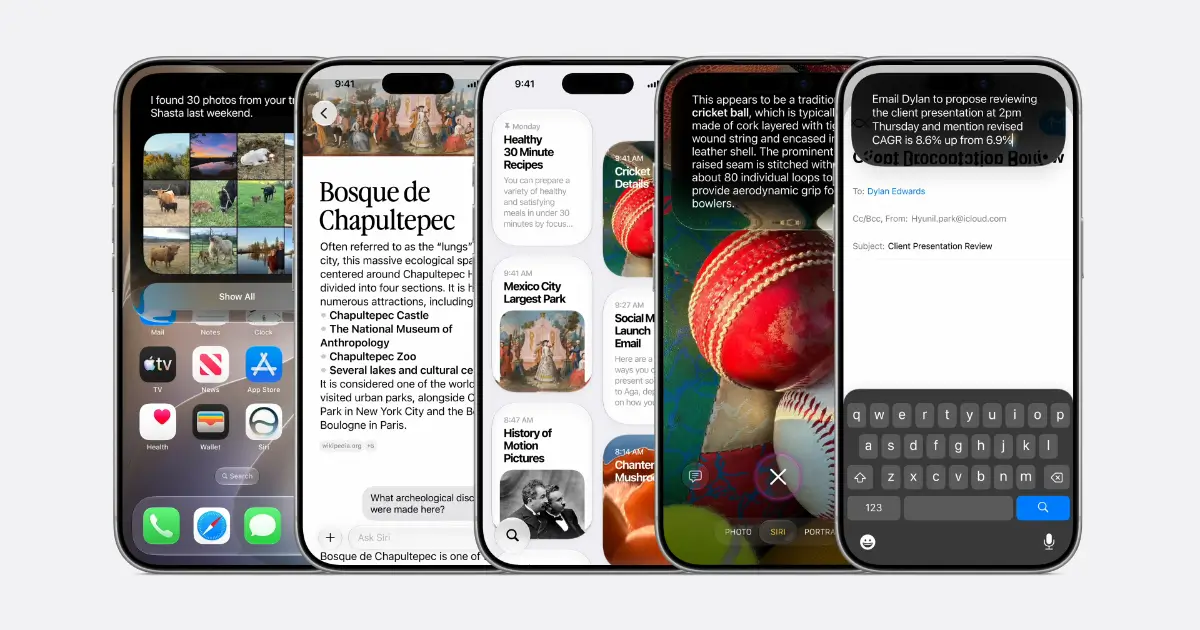
Apple announced Siri AI at WWDC 2026 on 9 June, a complete overhaul of Siri into an AI assistant capable of answering broad questions from the web. The day before the keynote, Apple updated its Applebot documentation to formally state that crawl data now feeds these AI-generated answers, giving publishers notice and two mechanisms to control how their content is used.
How does Siri AI use web search?
Siri AI is built to answer broad world knowledge queries by pulling live information from the web. Apple’s updated Applebot documentation is explicit: “Applebot crawled data may be used to provide additional context and up-to-date content when AI models are used to generate output for display in Apple products and services”, citing Siri and Apple Search as the direct examples.
The feature will expand across Safari and Spotlight in iOS 27, giving it multiple access points in everyday use. Siri AI can generate a synthesised answer from web sources and link back to them. The system is not yet live for end users. It ships with iOS 27, expected autumn 2026, but Applebot is already active and indexing.
What changed in Apple’s Applebot documentation?
The About Applebot page was updated on 8 June, the day before WWDC. The substantive additions:
- A new AI section explicitly linking Applebot crawl data to answer generation in Siri and Apple Search
- Confirmation that the
nosnippetmeta tag applies to AI answer generation, not only standard search snippets - A crawl-delay note confirming Applebot does not honour
Crawl-delaydirectives - Confirmation that
X-Robots-TagHTTP response headers are supported
Until this update, Applebot’s documented purpose covered Siri suggestions and Spotlight indexing. The addition formally places Apple in the same crawl-for-answers category as Google (AI Overviews), Bing (Copilot via Web IQ), Perplexity, and ChatGPT Search.
How can publishers opt out of Apple’s AI features?
Two separate mechanisms exist and they control different things:
nosnippet meta tag blocks content from being used as context in Siri’s AI-generated answers. Apple’s documentation is direct: “Apple will not use data tagged nosnippet as additional context and up-to-date content when AI models are used to generate output.” This is a retrieval-time control: it governs whether your pages feed live AI answers, not whether Applebot can crawl them.
Disallowing Applebot-Extended in robots.txt opts out of content being used to train Apple’s foundation models. This control has been available since 2023. It is a training-time mechanism: it governs whether your content is included in future model training runs, not whether it appears in live AI answers.
The two are independent. Blocking Applebot-Extended does not stop your content from appearing in Siri’s answers. If you want to opt out of both, you need both controls. One caveat: nosnippet is a broad directive respected by multiple search engines, so applying it to opt out of Apple will also affect snippets in Google, Bing, and any other engine that honours it.
Update, 7 September 2026: Apple has added a line to the Applebot documentation stating that “Site rules for Applebot-Extended are not considered in ranking for Search.” Blocking the training crawler therefore carries no ranking cost on Apple’s search surfaces, the same separation Google states for Google-Extended. The line appeared over the weekend of 6 September, ahead of the iOS 27 release.
What this means
Apple joins Google, Bing, Perplexity, and ChatGPT Search as a platform generating AI answers from live web crawl data. The installed base is large (Siri ships on every iPhone, iPad, and Mac), but Siri AI’s web answer features are not yet live, and how prominently they feature in daily use will only become clear once iOS 27 ships.
For most publishers, no immediate action is needed. If you have already applied nosnippet selectively to limit AI answer appearances on Google or Bing, those same tags will apply to Apple. If you have disallowed Applebot-Extended to opt out of training data use, that remains in place.
The gap: unlike Google, which now provides AI impression data in Search Console, Apple offers no equivalent publisher reporting. You will need server logs to gauge how actively Applebot is crawling, and there is no current way to measure whether your content is appearing in Siri AI answers once the product launches. That may change, but for now Apple’s AI search is a black box for publishers.
Sources
- Apple Updates Applebot Docs To Include Siri AI and AI Features — Search Engine Roundtable
- About Applebot — Apple Support
- Site Rules For Applebot-Extended Are Not Considered In Ranking For Search — Search Engine Roundtable
- Apple unveils next generation of Apple Intelligence, Siri AI, and more — Apple Newsroom
- Apple introduces Siri AI, a profoundly more capable and personal assistant — Apple Newsroom
- WWDC 2026: Everything announced on Siri AI, iOS 27, Apple Intelligence, and more — TechCrunch
- Apple’s long-awaited AI Siri overhaul is finally here — TechCrunch
More news
-
People Also Ask Answers Hit 97% AI-Generated, After April's Slump to 11%
AlsoAsked measured 97% of English PAA answers as AI-generated in early September, up from 11% in April. The same curve has reversed twice this year.
-
ChatGPT Now Cites Twice as Many Sources, and Listicles Lost Half Their Share
GPT-5.6 searches more and scopes searches to specific domains. Listicles and comparison pages lost citation share, but the pool they compete in doubled.
-
Shopify Finishes a 10-Month Expansion of Its Theme Performance Docs
Shopify has concluded a rewrite of its theme performance best practices, including a page on speed apps that cheat testing tools, and built the docs for agents.