Google Tells Platforms to Keep Link-Shared Pages Out of Search
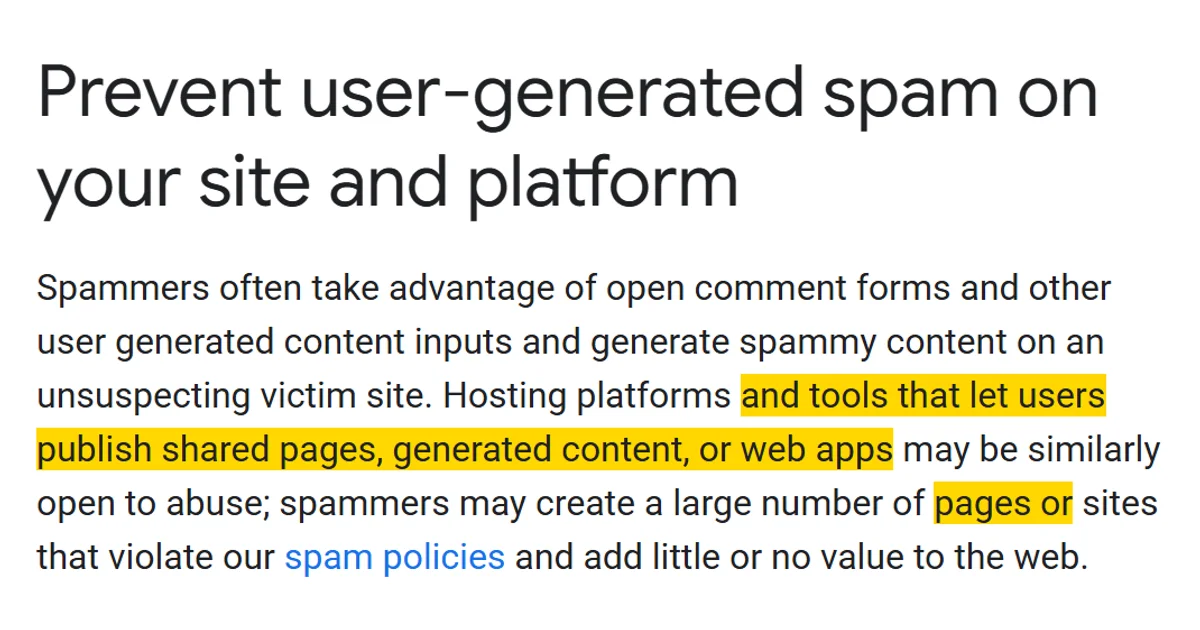
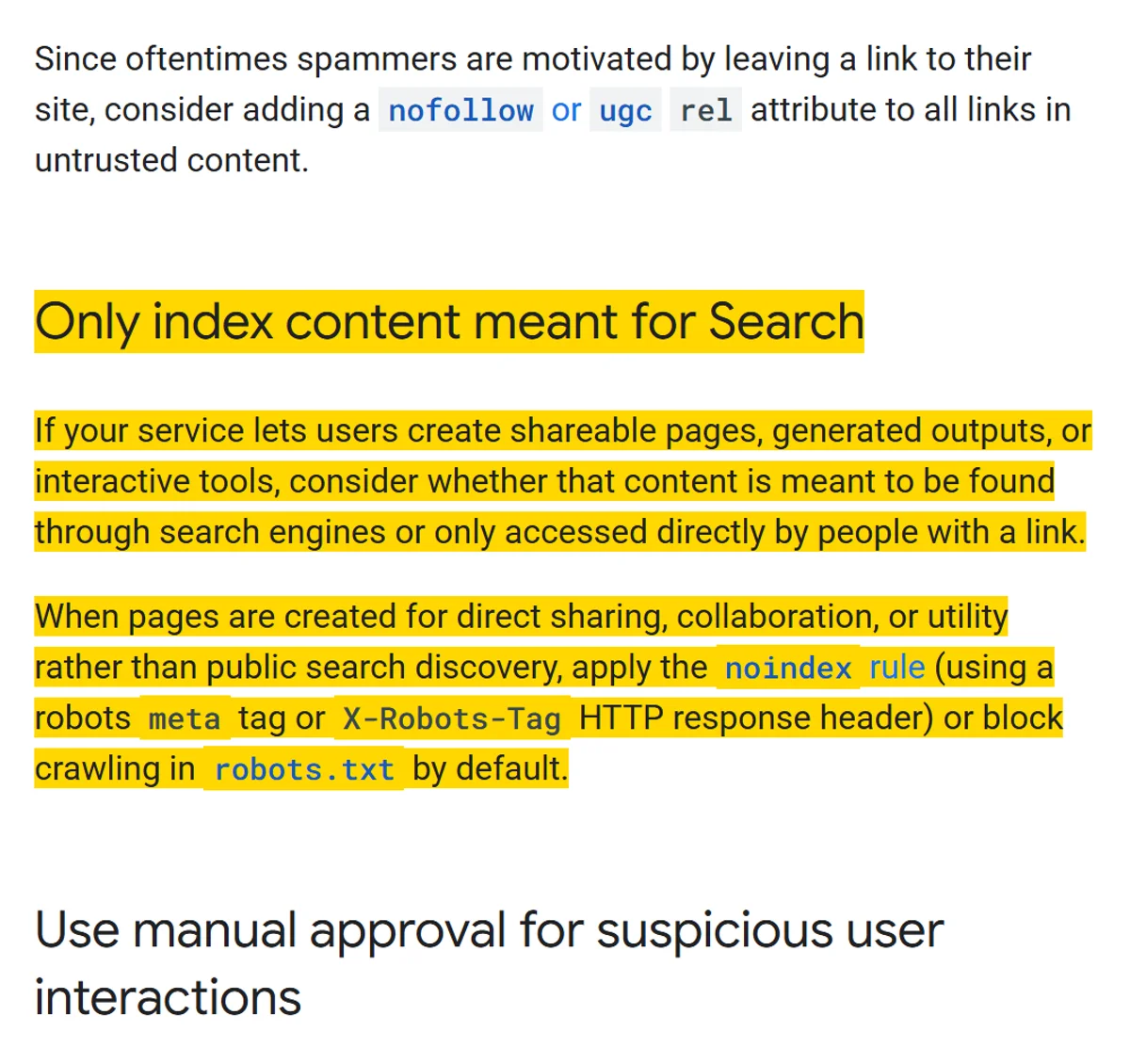
On 26 October 2026 Google updated its Search Central guide to preventing user-generated spam, which sets out how any site or platform that accepts content from its users can keep spammers out, from abuse policies and moderation to blocking automated sign-ups. Its introduction named comment forms and hosting platforms as the openings spammers exploit, and it now also names tools that let users publish shared pages, generated content or web apps. A new section says that pages made for sharing, collaboration or utility, rather than to be found in search, should be kept out of the index by default.
Google also added two monitoring points: verify the site in Search Console so manual action and security emails reach you, and watch the Page Indexing and Performance reports for spikes in indexed pages, or in queries unrelated to what the platform does. Its changelog says the aim is to keep user-created pages out of the index and catch spam earlier.
What kind of pages is Google describing?
Google has not said what prompted the change, but AI chat products already make pages of this shape: a shared conversation or a published artifact sits at a URL on the AI company’s own domain, open to anyone with the link. Such pages have reached Google’s results by accident twice. In 2025, ChatGPT users could tick “Make this chat discoverable” on a shared link, until OpenAI removed the option on 1 August after indexed chats were found containing personal information. In July 2026, shared Claude conversations surfaced in Google the same way.
Both were privacy incidents, but the same feature is an opening for spam, and the wording of the guide’s introduction shows the change. It used to say hosting platforms were open to abuse because spammers may create a large number of sites. It now adds tools that publish shared pages, generated content or web apps, and says spammers may create a large number of pages or sites. Spam of that kind needs no site of its own: a page on someone else’s domain puts the spammer’s content and links on ranking signals they did not earn.
Google’s site reputation policy, its rule against third-party content published to ride a host site’s established ranking signals, lists sites designed for user-generated content among the cases it does not cover, so this is handled as user-generated spam, where the responsibility sits with the platform. That is why the new monitoring advice is aimed at platforms: it is the platform’s site that Google says may receive the manual action.
Should you noindex shared pages or block them in robots.txt?
Use noindex, and leave the pages crawlable. The new section offers a robots.txt block as an alternative, but Google’s robots.txt documentation warns that a blocked URL can still be indexed if other pages link to it, because Google never fetches the page and so never sees a noindex on it. That was the Claude problem in July: the share pages carried a noindex header on a path that robots.txt disallowed. claude.ai had removed the block by 30 July, and as of 26 October 2026 its share and artifact pages return an X-Robots-Tag: none header, which Google reads as noindex, nofollow.
What the guidance means for platforms with share links
If your product has share links, AI-generated outputs or user-built apps, serve noindex on those pages by default and set an alert on the indexed count in the Page Indexing report. Verify the domain, and any subdomain users publish on, in Search Console, so a manual action reaches you as an email rather than as a traffic drop. Anything that has to stay private needs a login, because neither directive keeps a page private.
Sources
- Prevent user-generated spam on your site and platform, Google Search Central
- Previous version, last updated 10 December 2025, Wayback Machine
- Latest documentation updates, Google Search Central
- Introduction to robots.txt, Google Search Central
- Spam policies for Google web search, Google Search Central
- OpenAI removes ChatGPT self-doxing option, The Register
- Google Warns Tools On User-Generated Spam Guidance & More, Search Engine Roundtable
- Google Search says you should block indexing of link-shared content, Search Engine Land
More news
-
JPEG XL Now Works in Chrome, but Not in Google Images or Discover
Chrome 155 displays JPEG XL images, but Google Images and Discover previews do not support them. Keep a JPEG, WebP or AVIF fallback in the img tag.
-
Google Business Profile Adds Gluten-Free, Dairy-Free, Halal and Kosher Menu Badges
Restaurants can now tag menu items in Google Business Profile as gluten-free, dairy-free, halal or kosher, alongside the existing vegetarian and vegan badges.
-
Google Opens Applications for a UGC Fresh Data Program That Pushes Forum Content to Search
Large forums and social platforms can now apply to send fresh posts and engagement counts to Google Search through a dedicated pipeline, separate from crawling.