Demand for Non-AI Search Has Measurably Risen Since Google I/O 2026
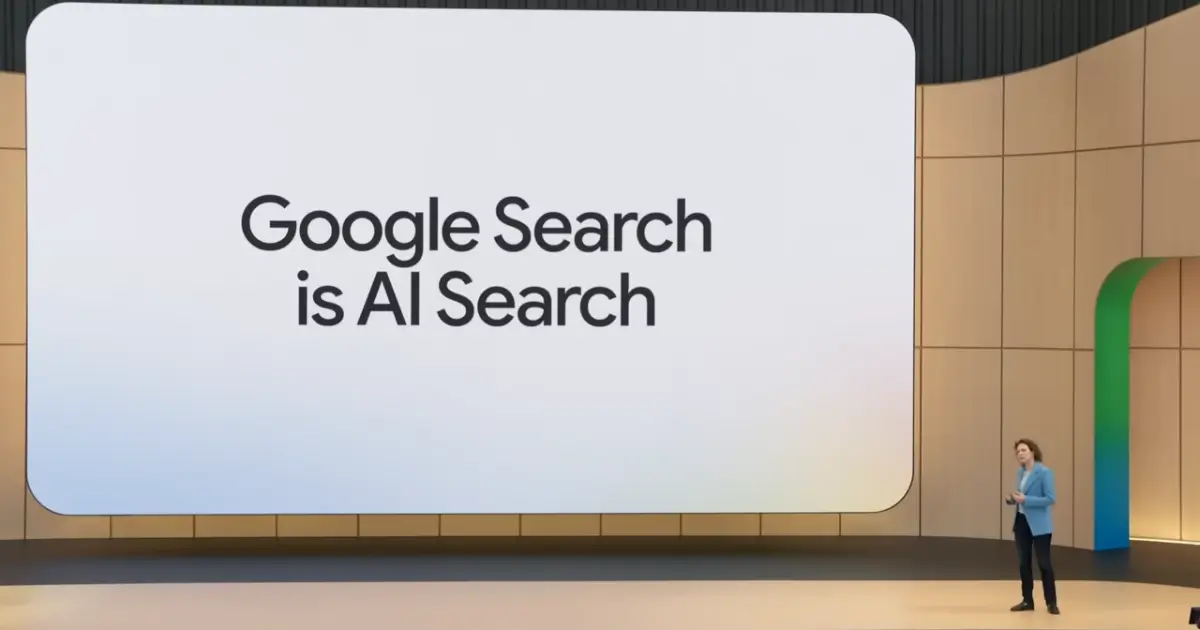
Since Google announced its AI Mode overhaul at I/O 2026 in May, a measurable number of users have been actively seeking alternatives. The numbers are large enough to be independently verified, and two of Google’s main competitors have responded with dedicated opt-out tools within weeks.
What the data shows
DuckDuckGo reported that US app installs grew an average of 18.1% week-over-week in the days following Google I/O, peaking at 30.5% on 25 May. On iOS, peak growth reached 69.9%. Third-party analytics firm Apptopia independently confirmed a 29% increase in daily US downloads and a 12% global increase over the same period.
Traffic to DuckDuckGo’s no-AI search page (noai.duckduckgo.com) tripled on 28 May and has since settled at roughly 84% above its pre-announcement baseline, suggesting the shift is sustained rather than a spike.
Research cited by Search Engine Journal adds broader context: roughly 82% of users have not adopted generative AI regularly, only 17.8% of the global working-age population uses generative AI tools, and 57% of users prefer traditional search for high-stakes queries covering health, finance, and other YMYL topics. The pattern is not blanket AI rejection. It is fragmented adoption, with users accepting AI for low-risk tasks and returning to traditional results when accuracy matters more.
A recurring driver behind that preference is opacity. Synthesised answers that summarise without clear source attribution give users no way to verify a claim, and on consequential queries that lack of transparency pushes them back to link-based results they can check for themselves.
How search engines are responding
DuckDuckGo launched No-AI search extensions for Chrome and Firefox, letting users set noai.duckduckgo.com as their default.
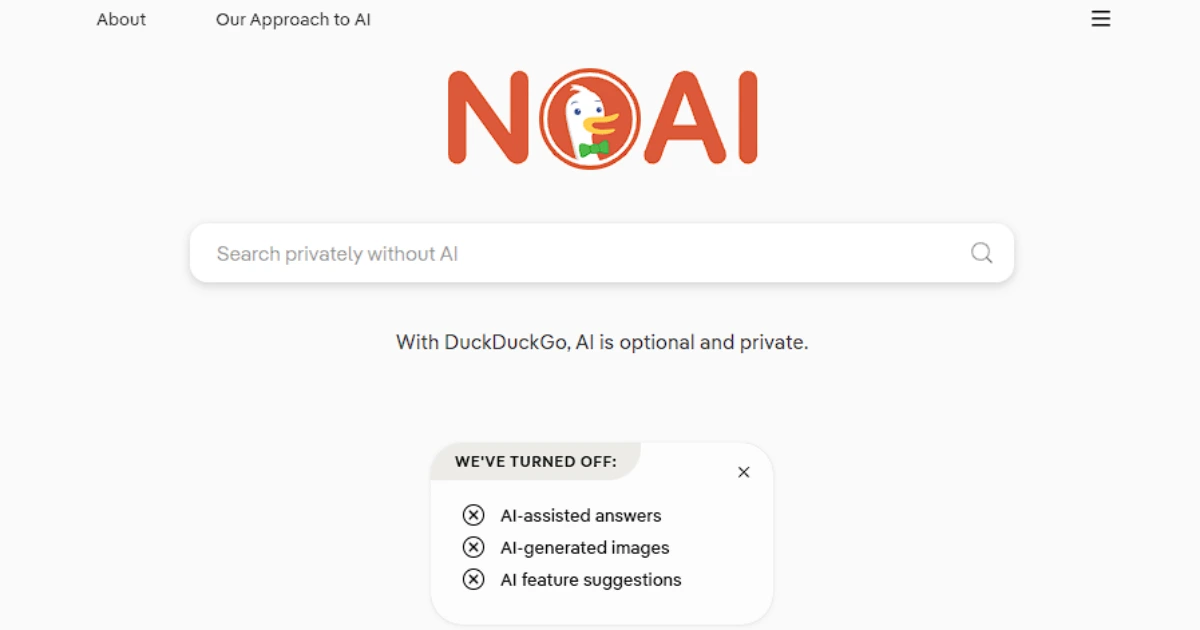
The company is also updating its Privacy Essentials extensions across Chrome, Firefox, Edge, and Opera to include AI search settings controls. DuckDuckGo CEO Gabriel Weinberg said Google is “force-feeding AI” and that results are “getting worse, not better.” Communications lead Kamyl Bazbaz put it plainly: “People just want a choice.”
Microsoft Bing is taking a similar position. Jordi Ribas, Microsoft’s President of Search and AI, announced a preview browser extension for Chrome and Edge that lets users toggle AI features on or off with a single click.
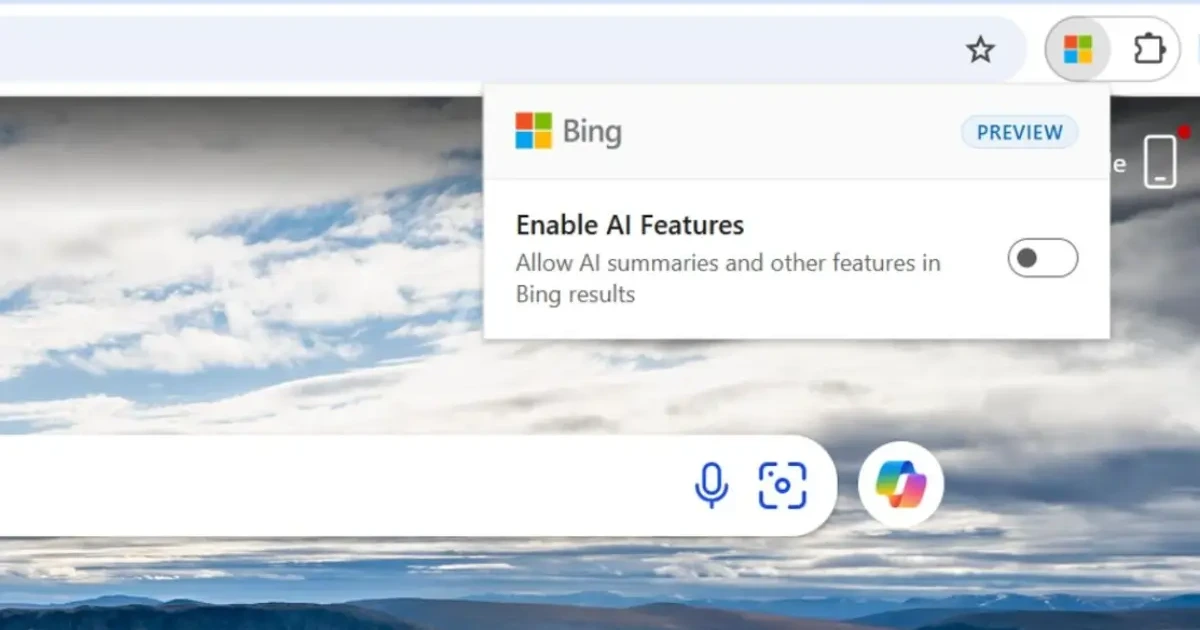
“Research tells us that not everyone wants to use AI for everything all the time,” Ribas wrote, framing the extension as a deliberate user choice rather than a fallback.
In a comment on the announcement, Ribas also revealed a query-level alternative that requires no extension: adding -ai to any Bing search returns results without AI features. The operator works immediately, for example: why is the sky blue -ai.
The Bing extension is currently a preview, with Ribas asking for user feedback before a wider rollout.
What this means for SEO
The user behaviour data offers a useful corrective to the more extreme takes on AI search. The majority of users, particularly those making consequential decisions, are not abandoning traditional search results. For SEOs concerned about AI Overviews eroding traffic across the board, the data suggests traditional ranking continues to matter most for the queries where intent is highest.
That said, the trend is worth tracking. If sustained demand for non-AI search produces lasting share shifts toward DuckDuckGo or Bing’s traditional results, traffic distribution across search engines becomes more fragmented. Optimising for Google alone carries a slightly higher concentration risk than it did a year ago.
DuckDuckGo holds roughly 2% of the US search market. The absolute numbers remain small, but the pace of both the user response and the product responses from DuckDuckGo and Microsoft signals that user choice is becoming a competitive differentiator in search for the first time in years.
That user appetite sits in direct tension with Google’s stated direction. On the New York Times Hard Fork podcast, Google CEO Sundar Pichai was asked whether he was comfortable with users abandoning classic search entirely in favour of AI Mode. He said he was, describing the transition as a continuum rather than an abrupt shift. On whether attribution would persist, he was sceptical: “And so it’s a continuum. But I don’t see sources and links will always be there as part of it.”
Sources
- DuckDuckGo installs are up 30% as users reject being ‘force-fed’ Google’s AI Search — TechCrunch
- DuckDuckGo makes its ‘no-AI’ search engine easier to access as its traffic booms — TechCrunch
- Why Users Are Fleeing to AI-Free Search — Search Engine Journal
- Bing AI Search Toggle Extension preview — Jordi Ribas, LinkedIn
- Google’s CEO is comfortable with AI Mode replacing classic search — Search Engine Journal
- Hard Fork: Sundar Pichai on AI Mode and the future of search — New York Times (YouTube)
More news
-
People Also Ask Answers Hit 97% AI-Generated, After April's Slump to 11%
AlsoAsked measured 97% of English PAA answers as AI-generated in early September, up from 11% in April. The same curve has reversed twice this year.
-
ChatGPT Now Cites Twice as Many Sources, and Listicles Lost Half Their Share
GPT-5.6 searches more and scopes searches to specific domains. Listicles and comparison pages lost citation share, but the pool they compete in doubled.
-
Shopify Finishes a 10-Month Expansion of Its Theme Performance Docs
Shopify has concluded a rewrite of its theme performance best practices, including a page on speed apps that cheat testing tools, and built the docs for agents.