Rank Trackers Are Being Served Altered Google Results
Two rank-tracking companies report that Google has been answering some of their automated searches with results pages that look complete and normal but carry the wrong results: most of them not the sites that genuinely rank on page one for that search. Nozzle, which collects Google results for its customers’ tracked keywords, published an analysis of 27.5 million results pages on 10 October 2026. DemandSphere, a search analytics company, reported the same behaviour on 7 October. Nozzle calls these “poisoned” SERPs; DemandSphere calls them “spurious results”.
An altered page carries no error and no captcha, so a rank tracker stores it as real, and a rank report shows the result as a ranking crash. Google has not commented on either report.
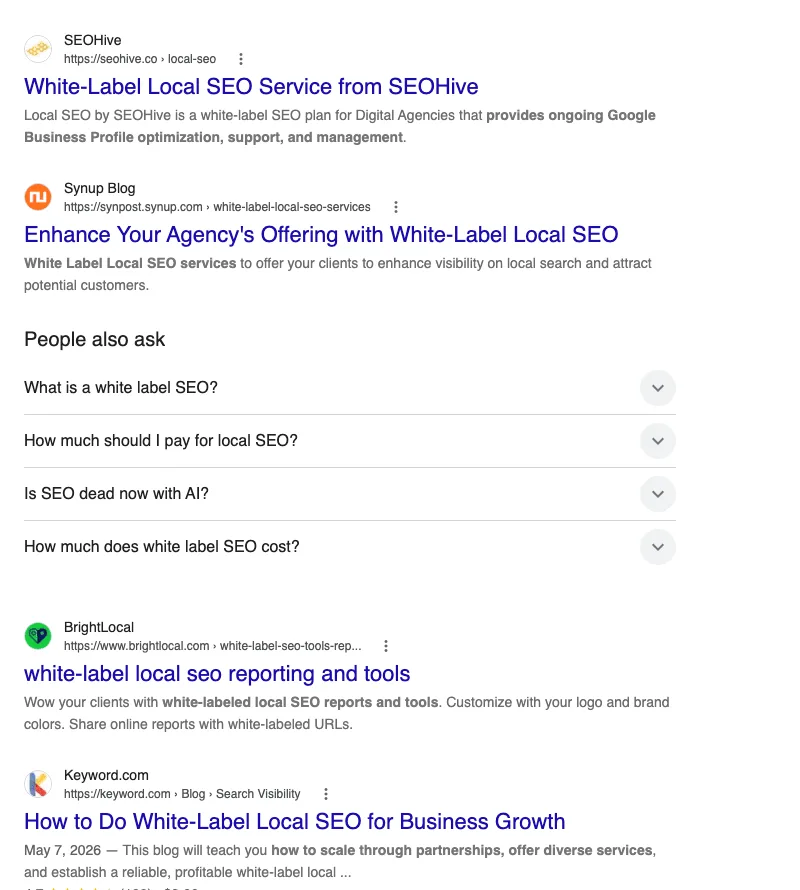
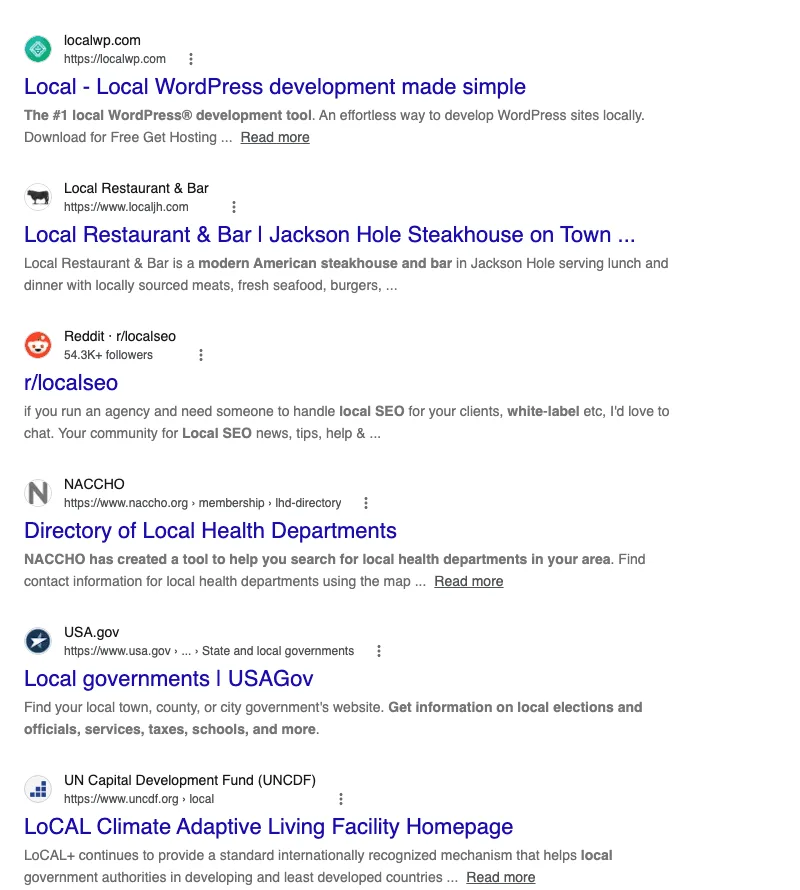
Nozzle published four examples, each the same keyword, device and location checked one to three days apart. For “white label local seo” in the United States, the normal page listed white-label SEO agencies. Three days later all nine page-one sites had been replaced, most of them by pages that matched the word “local” rather than the phrase: a WordPress development tool, a steakhouse in Jackson Hole, a directory of US local health departments and USA.gov. One newcomer was on topic, Reddit’s r/localseo community. Both pages opened with an accurate AI Overview explaining white-label local SEO; only the results below it changed.
What did Nozzle find?
Nozzle counts a results page as poisoned when fewer than half of the keyword’s usual sites appear anywhere on it and they come back on a later check. A keyword’s usual sites are the ones in its top 10 on at least 60% of its checks between 20 August and 9 September 2026, before the change.
- How much: 8.0% of results pages from 13 September to 9 October were poisoned, against 0.17% in the baseline.
- When: requests to Google began failing in large numbers on 13 September. The first poisoned pages appeared on 20 September, the rate peaked at about a quarter of all pages on 27 to 29 September, and it has run at 5 to 11% a day since 1 October.
- Effect on tracked sites: on keywords where a customer’s own site normally ranks, that site was missing from the top 10 on 58.6% of poisoned pages, against 2.7% in the baseline.
- How long: 77.9% of affected keywords had their usual sites back within three days, and four in five spells lasted a single check.
The United Kingdom had the lowest rate of the markets Nozzle reported, at 3.0%, against 8.5% for the United States and 18.8% for Austria. Device made little difference, between 7.1% and 8.3%. The route a request took did: over the same days in early October, one of the networks Nozzle collects through returned 1 to 7% poisoned pages and another 9 to 30%. That pattern points to Google treating some requesters differently, rather than its results changing for everyone.
DemandSphere has not published a method. Ray Grieselhuber of DemandSphere wrote that the behaviour affected “~11% of our daily SERPs” on current measurements and warned that the figure “could change rapidly”. He dates the blocking that preceded it to around 11 September.
What does an altered results page look like?
The pages are real Google results pages listing real sites, just the wrong ones for the query, and some would pass a human glance. The poisoned page for “heating and cooling services queens” on an iPhone kept the same top two businesses in its map pack, and Yelp and Angi stayed in the organic results; the other eight page-one sites were replaced by pages such as Home Depot and the Better Business Bureau.
Across all poisoned pages, social sites and forums gained ground. Reddit was in the top 10 of 28.8% of poisoned pages against 20.8% of the same keywords’ other pages, while YouTube, Yelp and MapQuest appeared less often. The paid parts of the page held steady: Shopping results kept 92.2% of the previous check’s items, against 92.8% in the baseline, while organic results kept 20.7%, against 88.5%. An AI Overview appeared on 34.9% of poisoned pages, against 54.2% in the baseline.
Nozzle found nothing in the page itself to flag the change: “No error, no captcha, the same template, the same build of Google’s frontend as a normal page.”
Why would Google alter results for rank trackers?
Both companies think rank trackers are caught in measures aimed at someone else. Grieselhuber wrote on 24 September that “Google does not want the AI labs to use their SERPs as part of their live retrieval process to answer questions”, calling it “what we believe is happening”. Nozzle describes the altered pages as Google’s response to collecting its results in bulk to feed AI answers, which rank trackers do in the same way. Barry Schwartz of Search Engine Roundtable takes the same view.
That is an inference about Google’s intent, and nobody has published evidence for it. Nozzle did not compare its pages with what people searching at the same time saw, so the claim that only automated traffic gets altered results rests on the pattern by request route, not a side-by-side test.
Derek Perkins of Nozzle told Search Engine Roundtable that Google is combining three measures: wide IP blocking aimed at large residential proxy networks, the pools of home internet connections that make automated traffic look like ordinary users; more captchas; and altered data on results pages it suspects are being scraped. The sequence follows Google’s goto redirect on result links in August, and a US court’s dismissal of Google’s DMCA claims against SerpApi, a company that resells scraped results, in July.
What altered results mean for your rank reports
A position drop in a third-party tool since 20 September that reversed within a few days is more likely to be this than a ranking change.
- Check Search Console for the same page and query. Nozzle’s test: if a site “disappears” in a rank report and Search Console still shows impressions and clicks, nothing happened to the site.
- Compare against several weeks, not the previous check. Yesterday’s check may have been poisoned too, so Nozzle compares each keyword against its usual page-one sites over the preceding weeks.
- Ask your tool provider whether it detects altered pages, not only failed requests. A tool that reports no outage can still be storing them; Schwartz expects most tools will not notice “too quickly”. DemandSphere says it is building reports that show customers the daily share of affected data.
Keyword and visibility figures in all-in-one platforms are built by collecting results pages the same way. Posts on X that DemandSphere quoted on 7 October reported Ahrefs and Semrush rankings disagreeing with live results from late September.
Sources
More news
-
Shopify Changes How It Counts Sessions, Moving Conversion Rates
Shopify Analytics changed how it counts sessions from 21 September 2026, so conversion rate can move with no change in orders or sales.
-
Search Console Now Reports Searches Made With Lens and Circle to Search
A new Web: multimodal search type in Search Console shows traffic from Google Lens, Circle to Search, image uploads and Chrome's Search this image.
-
Google Analytics 4 Adds Include Filters for Hostnames
Google Analytics 4 now lets you allowlist approved hostnames with an Include data filter, rather than only excluding unwanted ones.