Google Business Profile Post View Counts Return
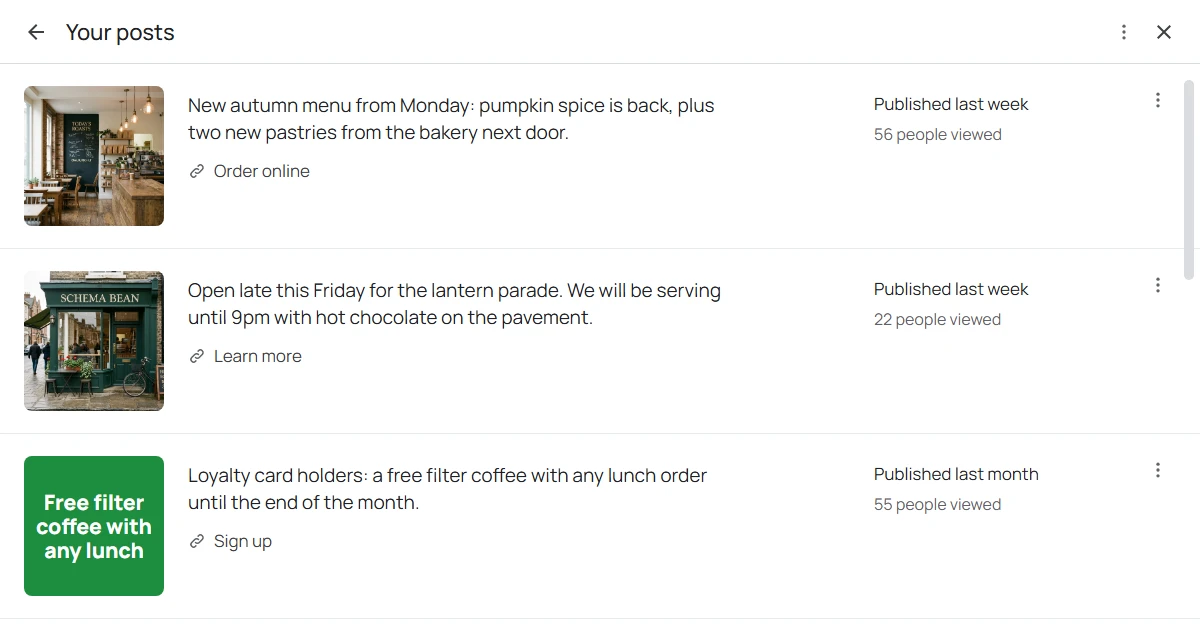
Google is rolling out view counts for Business Profile posts, shown on each post card in the Posts section of the dashboard. Google announced it in the September Small Business Bulletin, calls the feature Google Posts Reporting, and describes post views as one of its most requested features.
The count covers posts from the past 18 months on a rolling basis, all post types including updates, offers and events, and views from both Search and Maps combined into a single number. It brings back a per-post metric Google retired in February 2023, when it discontinued post views and button clicks during the move to the Business Profile Performance API, with no replacement at the time.
Two limits matter before you rely on it. The reporting sits in the dashboard only and is not yet in the API, so automated pulls across many locations cannot use it. And the bulletin mentions views but not clicks, so the number tells you how often a post was seen, not whether it drove any action. Google has also not defined a post view, so it is unclear whether the figure counts unique people or every appearance, where profile views elsewhere in the Performance report count each person once a day.
If you publish Google Posts, this is the first per-post visibility measure since 2023, so open the Posts section and use the counts to judge which updates, offers and events to repeat. For multi-location managers it stays a manual, per-profile check until Google extends the data to the API.
Sources
More news
-
Google Search Console Drops June Indexing Data With No Backfill
Google Search Console's page indexing report is missing several days of June 2026 data, and Google says it will not be backfilled.
-
Google Business Profiles Add a Collected Info Tab
Google Business Profiles now have a Collected info tab where owners can review details Google's automated assistant gathered, and delete inaccurate ones.
-
Google Cuts the Search Profile Threshold to 10,000 and Adds Multi-Account Support
Google has lowered the Search profile follower threshold to 10,000 and now lets one account manage up to 10 separate profiles, aimed at publishers running several brands.