Scammers Are Using AI-Generated Photos To Redirect Calls From Google Maps Listings

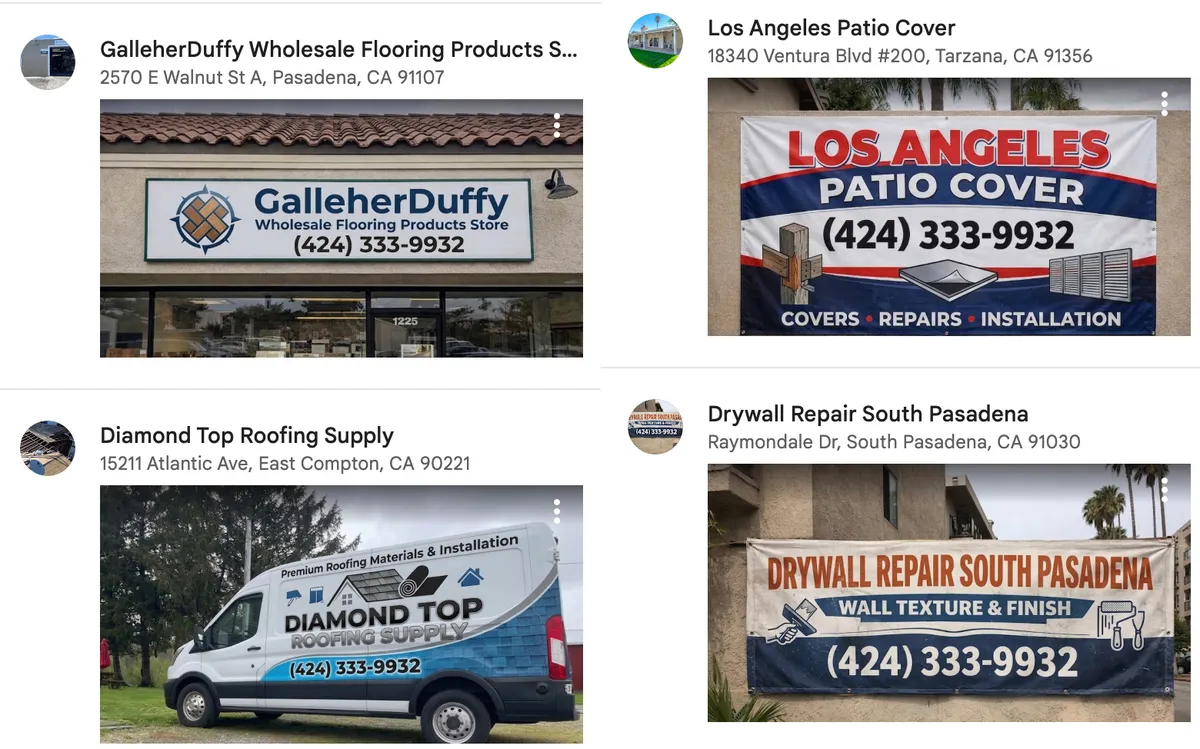
Scammers are using the Google Maps contributor program to upload AI-generated photos carrying a fake phone number onto Business Profiles they do not own, redirecting anyone who calls that number to themselves instead of the real business. One contributor uploaded the same fake number to more than 150 listings before Google removed the photos and the account, but only after the pattern was reported publicly, not through the standard photo-report flow.
How the scam worked
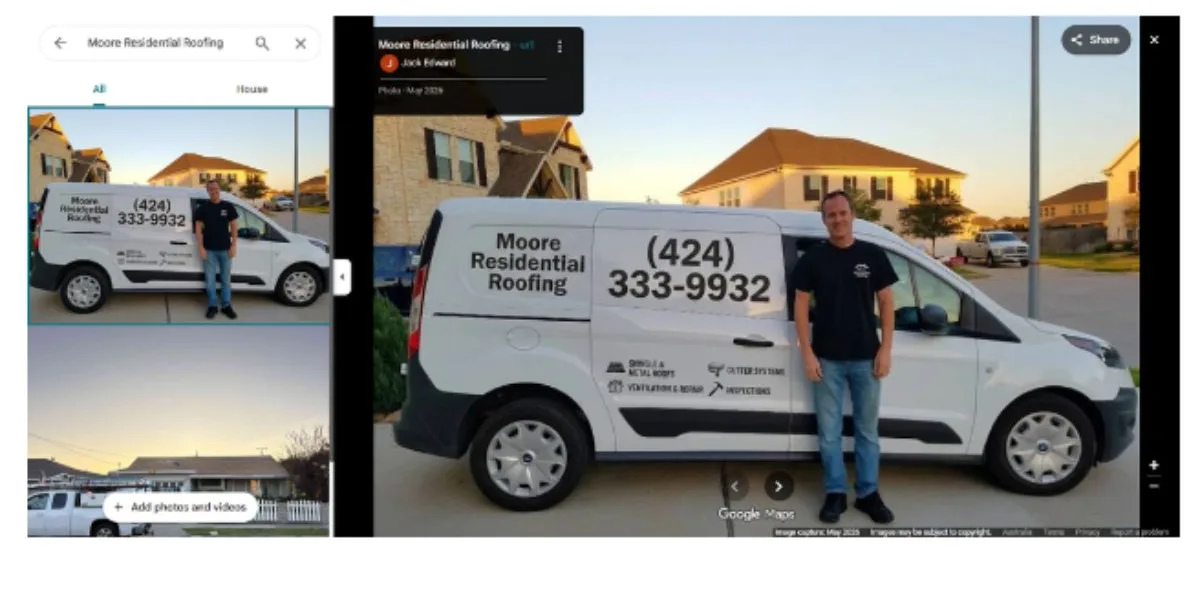
Naomi Stevens, who first documented the pattern in a LinkedIn post picked up by Search Engine Roundtable, found a contributor had uploaded an AI-generated image to a client’s roofing-company profile, styled to look like a cover photo, carrying the business’s name but a phone number that did not belong to it. Because Google displayed it prominently on the profile, it read as a legitimate cover image rather than spam.
Checking the contributor’s history turned up more than 150 photo contributions across unrelated US businesses, all carrying the same incorrect number. That pattern, one account, one number, dozens of industries, is what marks it as systematic rather than a one-off. Stevens reported the image and contacted Google support directly, and received a generic response that did not address the issue. Adding a genuine logo and cover image afterwards did not displace the fake one either.
The photo and the contributor account were removed roughly a day after the story was picked up publicly. That is a real resolution, but it came from press and social attention, not from the report tool built for this. A business without a following able to make noise on its behalf has no evidence the standard flow would have worked any faster.
AI-generated photos are already faking evidence elsewhere
The same technique, a photo realistic enough to pass as evidence, is already being used against other platforms. UK food safety consultancy Food Alert told BakeryAndSnacks it is handling cases of AI-manipulated images, mould on a product, glass in food, an undercooked dish, submitted as evidence to extract refunds from delivery platforms including Deliveroo, Uber Eats and Just Eat. Food Alert’s Alasdair Dean says a customer service team processing dozens of complaints a day has far less time to scrutinise an image than a careful reviewer would.
The images are convincing enough that a 2025 study cited by Food Alert found 66 to 73% of participants could not tell an AI-generated photo of a pizza, a pasta dish or a croissant from a genuine one. More than 34 million AI images are generated every day, and AI image editing was the fastest-growing software category of 2024, up 441% year on year, so the tooling behind this keeps getting cheaper and better. Separate research Food Alert cites found only 38% of AI image generators apply adequate watermarking and just 18% provide sufficient deepfake labelling, and even where that metadata exists, a screenshot strips it out.
Why review extortion is the next place this could go
Google reviews already have their own extortion pattern, and it does not currently involve photos. Law firm Minc Law describes scammers flooding a Business Profile with fake one-star reviews, then demanding payment to remove them. PinMeTo documents a named case: Gain City, a Singapore retail chain, was offered a paid removal service over WhatsApp in April 2026, declined, and saw a wave of suspicious one-star reviews across several stores over the following two weeks, most from accounts with no other Google Maps activity. PinMeTo describes the pattern as targeting multi-location brands across Europe too, run through extortion scripts distributed on WhatsApp and Telegram.
That scam works today using nothing more sophisticated than a fake star rating and a throwaway account. No source reviewed for this piece documents an extortion attempt that also attaches a fabricated damage or contamination photo to make the review harder to dispute, the way Food Alert has already seen happen in refund fraud. But the pieces for that combination already exist separately: convincing fake images, an established extortion playbook aimed squarely at reviews, and a platform that, on this evidence, responds to a public pattern faster than it responds to a private report. That gap is worth Google closing before someone does, rather than after.
What Business Profile managers should do now
Check your Business Profile’s photo section periodically for images you did not upload, particularly anything styled as a cover photo or profile picture carrying contact details. If you find one, report it.
Sources
More news
-
Google Search Console Drops June Indexing Data With No Backfill
Google Search Console's page indexing report is missing several days of June 2026 data, and Google says it will not be backfilled.
-
Google Business Profiles Add a Collected Info Tab
Google Business Profiles now have a Collected info tab where owners can review details Google's automated assistant gathered, and delete inaccurate ones.
-
Google Cuts the Search Profile Threshold to 10,000 and Adds Multi-Account Support
Google has lowered the Search profile follower threshold to 10,000 and now lets one account manage up to 10 separate profiles, aimed at publishers running several brands.