Google Is Emailing Publishers Their Preferred Sources Selection Count
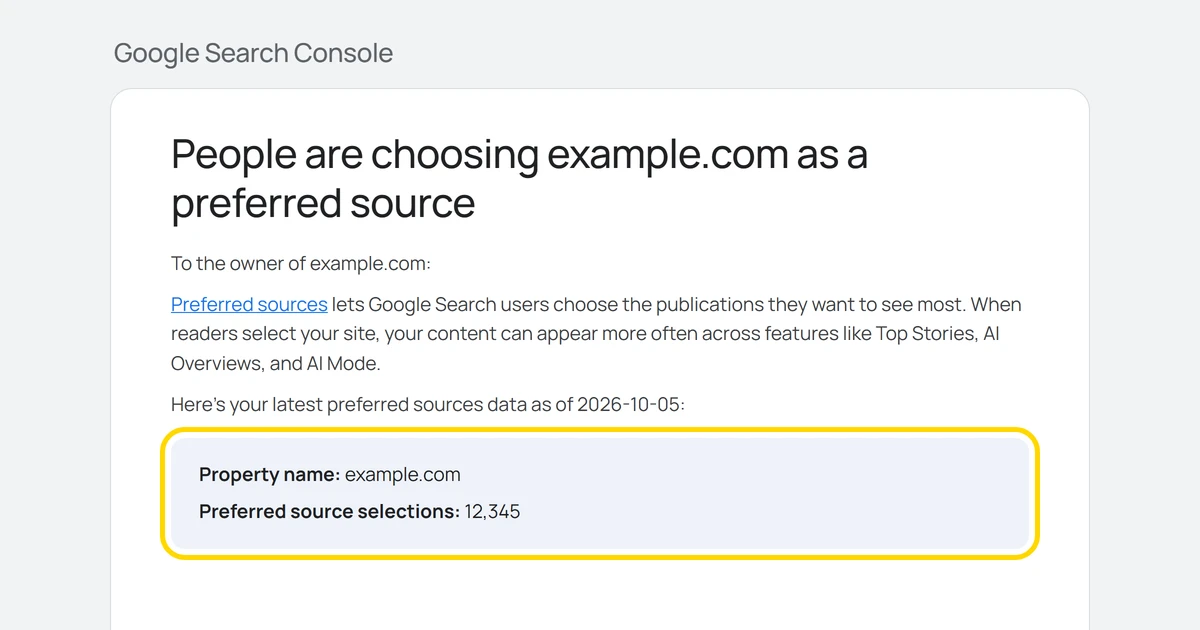
Search Console started emailing site owners on 6 October 2026 with a figure Google had not shared before: how many people have chosen their site as a Preferred Source. The email, headed “People are choosing [domain] as a preferred source”, gives “your latest preferred sources data as of 2026-10-05” as a single “Preferred source selections” number, then recommends installing or upgrading to the JavaScript preferred source button and links to a survey asking how often owners want the data and which metrics they would want in Search Console. Barry Schwartz, founder of Search Engine Roundtable, published a copy, and Search Engine Land reported that the emails went to some site owners. Google has not announced the emails, and there is still no Preferred Sources report or filter inside Search Console.
Until now the only way to judge whether readers were selecting a site was indirect, through Top Stories performance and repeat visits. If you publish news, check the inbox of every verified owner on your properties and record the number with its data date, because there is nowhere in Search Console to look it up again. One cumulative figure cannot show whether a button or a campaign moved it, so treat it as a baseline and compare it with the next email, if Google sends one. The survey is the route Google has opened for asking for the count to appear in Search Console itself.
Sources
More news
-
Google Business Profile Policy Bars Calls to Action in Listings, Permits Offers in Posts
Google's Maps content policy names calls to action, time-bound promotions and pricing as off-limits in Business Profile listings, and allows offers in posts.
-
Search Console Now Combines Traffic From Several Countries
Search Console's Performance report now lets you select several countries in one filter and see their Google Search traffic as a single combined total.
-
Google Shows How Long Crawling, Indexing and Search Result Changes Take
Gary Illyes showed Google's typical and slowest times for 23 crawling, indexing and serving processes, from URL discovery to core update recovery.