Google Bars Fake and Undisclosed Incentivised Reviews From Review Snippet Markup
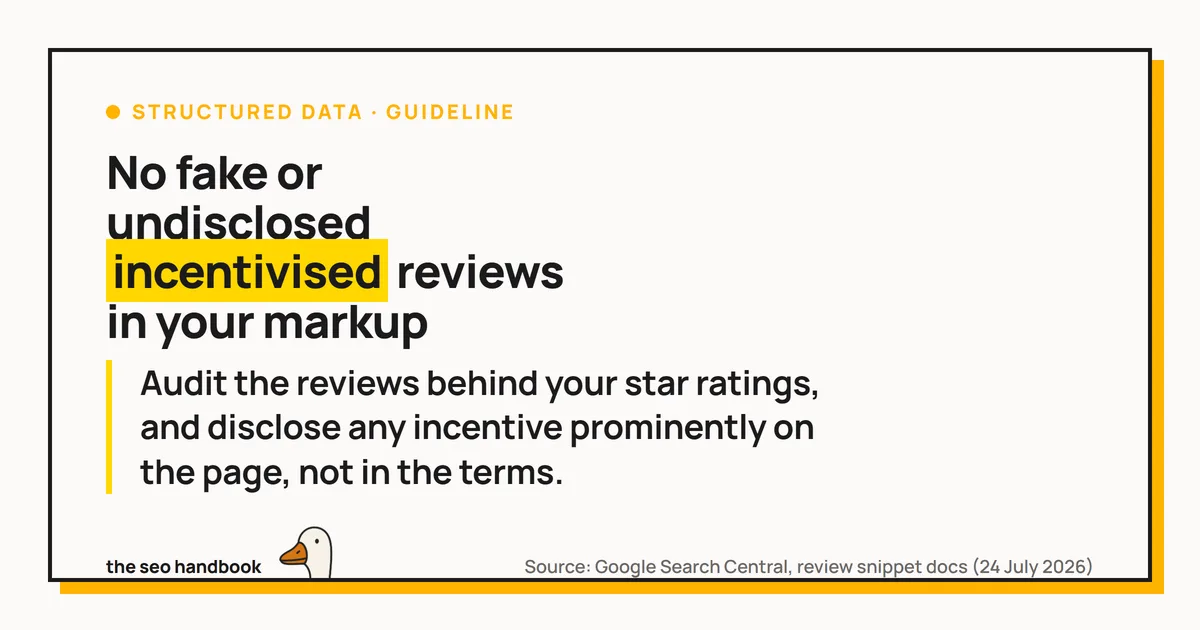
On 24 July 2026, Google added a new guideline to its review snippet structured data documentation: “Don’t include fake or undisclosed incentivized reviews on your page or in your structured data markup.” Google gives two examples of what that covers: reviews that are not based on a genuine product or service experience, and reviews written in exchange for a benefit such as money, discounts, vouchers or free products where that incentive is not clearly and prominently disclosed.
The rule sits inside the guidelines that govern star-rating eligibility, so it carries teeth. Breaching a structured data guideline can bring a manual action, and if one is applied Google may ignore the review markup on the page and remove its rich-result eligibility, though the page itself can still rank. Search Engine Journal noted the update explicitly widens the review guidance and pairs it with the manual-action warning.
If your pages show star ratings pulled from Review or AggregateRating markup, treat this as a prompt to audit the reviews behind that markup. Remove anything fabricated or not tied to a real experience, and where reviews were incentivised, make the disclosure clear and prominent on the page itself. A disclosure hidden in terms and conditions, email fine print, or an off-page policy is unlikely to meet the standard, and losing star ratings to a manual action costs a visible click-through advantage in the results.
Sources
More news
-
Google Search Console Drops June Indexing Data With No Backfill
Google Search Console's page indexing report is missing several days of June 2026 data, and Google says it will not be backfilled.
-
Google Business Profiles Add a Collected Info Tab
Google Business Profiles now have a Collected info tab where owners can review details Google's automated assistant gathered, and delete inaccurate ones.
-
Google Cuts the Search Profile Threshold to 10,000 and Adds Multi-Account Support
Google has lowered the Search profile follower threshold to 10,000 and now lets one account manage up to 10 separate profiles, aimed at publishers running several brands.